 ultimate-guide
Best Materials for Durable Outdoor Kitchens
Last Updated: October 31, 2026
Quick Summary
The best materials for durable outdoor kitchens pair stainless steel or powder-coated aluminum frames with granite, quartzite, or sintered stone countertops, and HDPE polymer for sink bases and storage. Specify the frame, doors, hardware, fasteners, and countertop as one assembly, because mismatched parts fail early through corrosion, heat, or load.
- Stainless steel suits grill surrounds and high-heat zones but needs rinsing to prevent tea staining.
- Keep polymer cabinets at a safe distance from grills and pizza ovens per manufacturer clearance guidance.
- Heavy stone slabs need a frame rated to carry the load or they sag and crack.
- Reseal wood annually or when water stops beading on the surface.
- Fully exposed islands should lean toward stainless steel, HDPE, and stone.
Table of Contents
- What Makes an Outdoor Kitchen Durable
- Outdoor Kitchen Cabinet Materials Compared
- Best Outdoor Kitchen Countertop Materials
- Weather-Resistant Outdoor Kitchen Materials for North Texas
- Outdoor Kitchen Material Maintenance That Protects Your Investment
- Matching Cabinets, Countertops, and Appliances as One System
- Start Your Outdoor Kitchen Design
- Frequently Asked Questions
What Makes an Outdoor Kitchen Durable
Durability in an outdoor kitchen comes down to four forces: moisture, ultraviolet light, heat cycling, and the movement of the structure itself. The best materials for durable outdoor kitchens resist all four at once, and no single material wins on every count. At Villefort Luxury Outdoor Living, we plan outdoor kitchens across North Texas by matching each material to the job it actually does, because a cabinet door, a countertop, and a grill surround face very different conditions even when they sit inches apart.
The most common mistake is choosing materials by appearance alone. A beautiful finish that fades or warps within a few seasons costs more in the long run than a plainer surface that holds up. In practice, durability means the whole assembly performs together: the cabinet body, the door, the hardware, the fasteners, and the countertop above them.
Outdoor Kitchen Cabinet Materials Compared
Cabinet material is the decision that shapes everything else in an outdoor kitchen. The common options fall into four families: stainless steel, powder-coated aluminum, polymer and composite, and sealed wood. Each has a clear best use and a real trade-off. The table below is a starting point; the subsections that follow explain the mechanisms that actually determine how long each material lasts.
| Material | Durability Strengths | Watch Out For | Best For |
|---|---|---|---|
| Stainless steel | Rust resistance, heat tolerance | Surface scratching, fingerprinting, tea staining in salt air | Grill surrounds, high-heat zones |
| Powder-coated aluminum | Lightweight, corrosion resistant | Can dent and fade; coating chips at cut edges | Frames and door fronts |
| HDPE / marine-grade polymer | Moisture and UV resistance | Lower heat tolerance near grills; color can chalk over time | Sink bases, storage cabinets |
| Sealed wood | Warm look, easy to refinish | Needs regular resealing; checks and cracks if neglected | Covered, shaded structures |
Stainless Steel and Powder-Coated Aluminum Frames
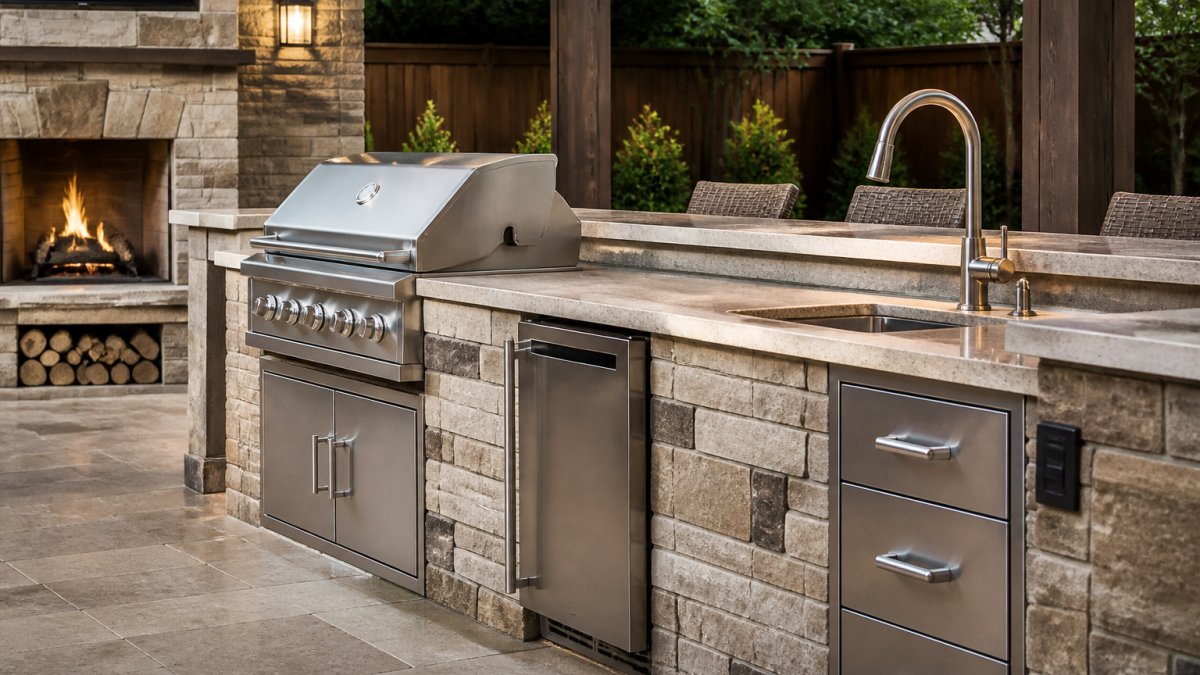
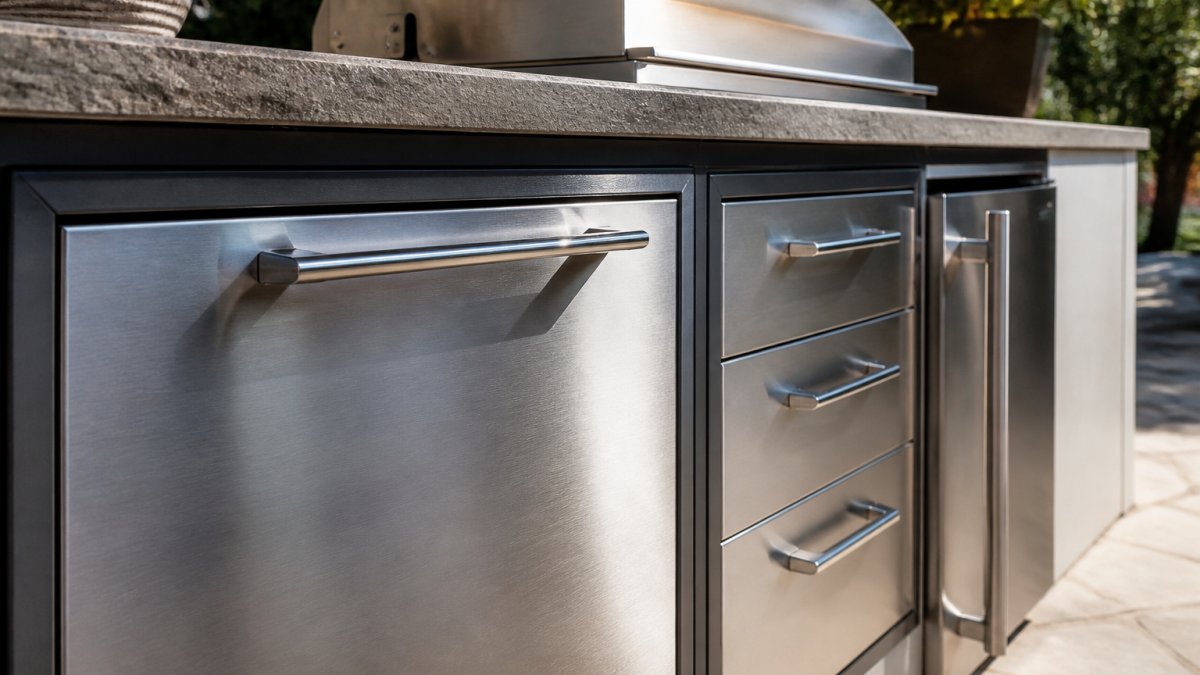
Stainless steel is the standard for cabinet bodies and grill surrounds because it handles heat and moisture better than most alternatives. A less obvious risk is tea staining, the brown surface discoloration that appears when chlorides sit on the metal; rinsing and drying after storms prevents it.
Powder-coated aluminum is lighter and often more affordable as a frame material. The catch, noted in Range Outdoor Living's outdoor kitchen systems guide, is that aluminum can dent and fade. The powder coat protects the metal only where it is intact, so chips at cut edges, hinge points, and fastener holes become corrosion starting points.
HDPE, Composite, and Sealed Wood Cabinetry
Its weakness is heat: keep polymer cabinets at a safe distance from grill and pizza oven surrounds, and check the manufacturer's clearance guidance rather than guessing. Composite and PVC behave similarly, offering low maintenance and consistent color, though some composites can chalk or fade under relentless sun.
Sealed wood, including teak, ipe, cypress, and bamboo, brings warmth and can be refinished when the finish dulls.
Best Outdoor Kitchen Countertop Materials
The best outdoor kitchen countertop material balances heat resistance, stain resistance, UV stability, and structural weight. Unlike an indoor counter, an outdoor slab faces direct sun, temperature swings, and the radiant heat of a grill or pizza oven. The table below compares the common choices; the notes after it explain the mechanisms that decide long-term performance.
| Material | Heat and UV Behavior | Watch Out For | Best For |
|---|---|---|---|
| Granite | Tolerates sun and temperature swings; natural variation | Sealing schedule varies by stone; some slabs are more porous | Primary cooking and prep surfaces |
| Quartzite | Hard, heat tolerant, UV stable | Heavy; needs a frame rated for the load | High-use islands |
| Concrete | Design flexibility, matte look | Can crack; needs sealing and careful mix design | Custom shapes and integrated sinks |
| Marble and limestone | Striking appearance | Porous and stain-prone outdoors; etch easily | Covered, low-traffic accents |
| Sintered stone | Non-porous, UV stable | Fabrication and edge details require experienced fabricators | Modern, low-maintenance surfaces |
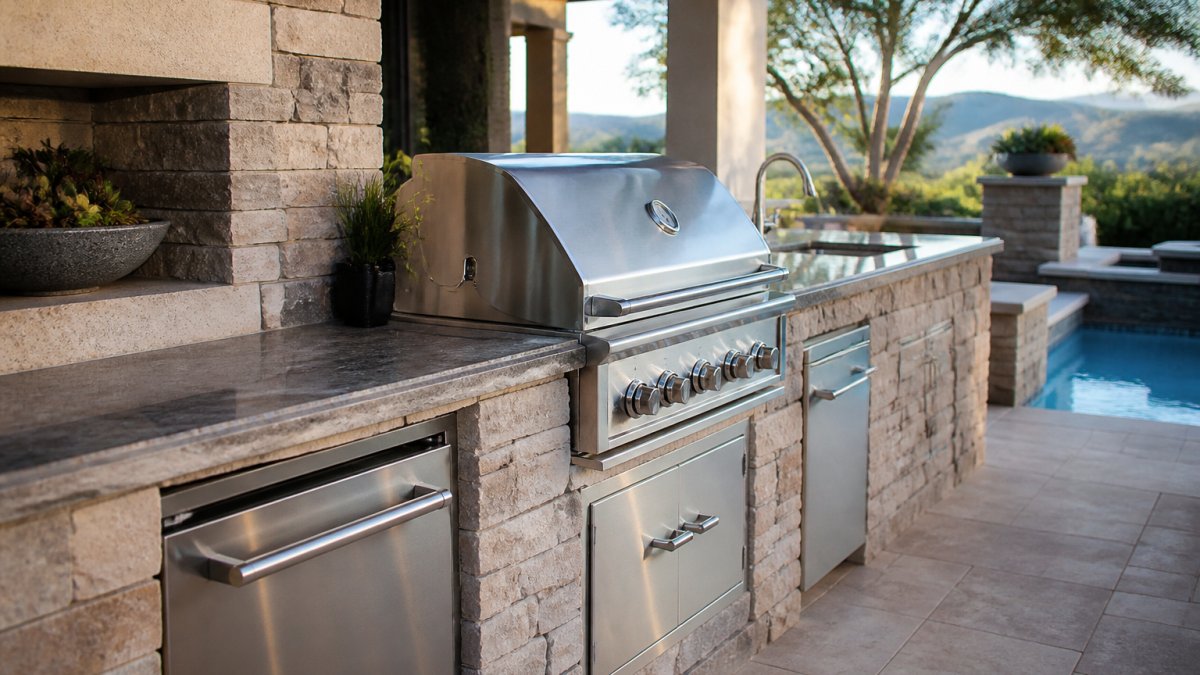
Granite and quartzite lead for outdoor use because they tolerate sun and temperature swings without fading. Concrete offers design flexibility and a matte look, but it is the material most sensitive to mix design, reinforcement, and sealing, a poorly detailed slab cracks. Marble and limestone look striking but are more porous and stain-prone outdoors, so reserve them for covered areas or accents. Sintered stone is a newer option worth evaluating for its non-porous surface, provided the fabricator is experienced with outdoor edge profiles.
Two compatibility rules decide whether a beautiful countertop stays beautiful. First, weight: a heavy stone slab needs a frame rated to carry it, and an underbuilt frame will sag or crack the slab. Second, heat: a countertop directly beside a grill or pizza oven should be specified for radiant heat, and the cabinet beneath it should be rated for the same exposure. A high-heat appliance against a polymer cabinet discolors it even when the countertop above is fine.
Weather-Resistant Outdoor Kitchen Materials for North Texas
North Texas weather is the real test: intense summer sun, sudden storms, hail, and occasional freezes. Weather-resistant outdoor kitchen materials here need strong UV stability and moisture resistance, plus hardware and fasteners that will not corrode.
Shade changes the calculus. A kitchen under a pergola or covered patio can use sealed wood and more delicate finishes. A fully exposed island should lean toward stainless steel, HDPE, and stone.
Outdoor Kitchen Material Maintenance That Protects Your Investment
Outdoor kitchen material maintenance is simple but not optional. Rinse stainless steel with mild soap and water, then dry it to limit water spotting. Reseal wood annually or when water stops beading on the surface. Wipe stone countertops promptly to prevent stains, and check hardware and fasteners each season for corrosion or looseness. Cover or shelter surfaces during freeze events. A common mistake is ignoring the small parts: a corroded hinge or fastener can fail long before the cabinet body does.
Matching Cabinets, Countertops, and Appliances as One System
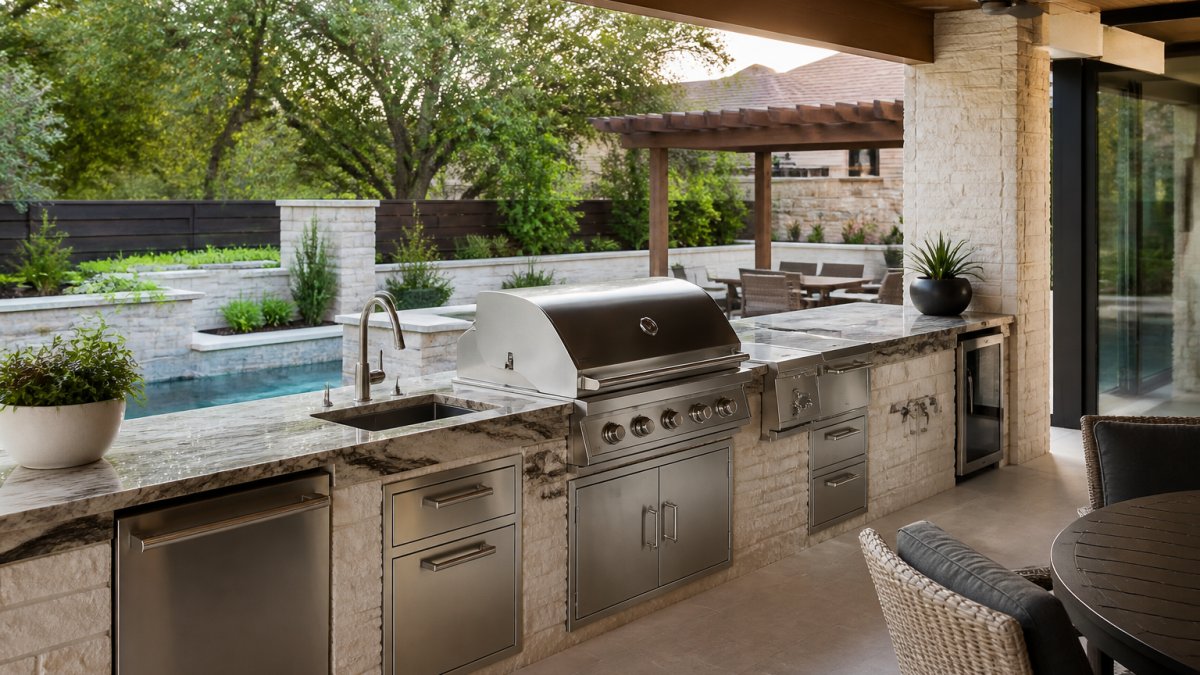
The gap most guides miss is coordination. A durable outdoor kitchen is a system, and the frame, doors, hardware, fasteners, countertop, and appliances must be specified together. A stone countertop over an underbuilt frame sags. A high-heat grill against a polymer cabinet discolors it. For a deeper look at pulling these choices into one plan, see our guide to choosing premium materials for outdoor kitchens, and for the full design sequence, review custom outdoor kitchen design tips.
Watch out: mixing materials without checking how they expand, conduct heat, and carry load is the most common cause of early failures in outdoor kitchens.
Start Your Outdoor Kitchen Design
Choosing the best materials for durable outdoor kitchens starts with how you cook, how much sun the space gets, and how you want it to look in ten years. Villefort Luxury Outdoor Living designs and builds cohesive backyard environments, managing pools, outdoor kitchens, pergolas, and landscaping under one vision, with hands-on attention from consultation to final walkthrough. Explore our outdoor kitchens to see what we offer, and learn how to book a custom backyard design consultation when you are ready.
Frequently Asked Questions
What is the most durable material for outdoor kitchen cabinets?
Stainless steel, particularly AISI 304, is widely used for durable outdoor kitchens because it resists rust and heat, and . HDPE and powder-coated aluminum are strong alternatives, though aluminum can dent and fade. The right choice depends on your climate, budget, and how the cabinets interact with your countertop and appliances. A designer can help you weigh each option for your specific layout.
Is stainless steel or masonry better for outdoor kitchen cabinets?
Stainless steel suits homeowners who want a built-in look, low maintenance, and resistance to rust and corrosion. Masonry, including concrete and stone, offers a heavier, more permanent structure but needs proper sealing and may require more upkeep against moisture. In North Texas, where UV exposure and temperature swings are significant, stainless steel frames paired with weather-resistant panels often hold up well. Discuss both with your builder before committing.
What countertop material holds up best outdoors?
Sintered stone, granite, quartzite, and sealed concrete are commonly considered for outdoor kitchen countertops because they resist heat, moisture, and UV exposure. Marble is listed as an option but needs more care against staining and etching. The best choice depends on your grill and pizza oven placement, direct sunlight, and how much maintenance you want. Ask your fabricator about sealing requirements and edge profiles for outdoor use.
How do you protect an outdoor kitchen from weather?
Choose weather-resistant outdoor kitchen materials such as stainless steel, HDPE, powder-coated aluminum, and sealed stone. Use a sealed finish on wood and concrete, keep drainage clear, and cover appliances when not in use. In North Texas, protection from direct sunlight and heavy rain matters most. Regular cleaning and prompt repair of scratches or chips also extend lifespan. A covered patio or pergola can reduce exposure significantly.
Which outdoor kitchen materials require the least maintenance?
Stainless steel, HDPE, and powder-coated aluminum generally need the least maintenance: wipe them down, inspect fasteners, and address scratches early. Sintered stone and sealed granite countertops also clean easily. Wood and concrete need more frequent sealing and inspection. Even low-maintenance materials benefit from a yearly check of hardware, seals, and drainage to prevent rust, warping, or fading over time.
Can porcelain countertops be used in an outdoor kitchen?
Porcelain and sintered stone are increasingly used outdoors because they resist moisture, UV exposure, and temperature changes. The key is proper installation: a solid substrate, correct adhesive, and expansion gaps. Not every fabricator works with these materials outdoors, so confirm experience before choosing. Pair them with compatible cabinets and fasteners to avoid stress points. Ask your builder whether porcelain fits your climate and design.
The hardest part of a durable outdoor kitchen is not picking a material; it is getting every material to work together in your specific yard. Villefort Luxury Outdoor Living handles that coordination for you, from custom design tailored to your home to premium materials and skilled craftsmanship, with reliable scheduling and a clear process from first consultation to final walkthrough. Get started with Villefort Luxury Outdoor Living and request a free estimate for a backyard built to last.