 listicle
What Fire Feature Fits Your Luxury Backyard?
Last Updated: November 3, 2026
Quick Summary
A luxury backyard fire feature is a planned focal point, such as a custom outdoor fireplace, fire table, fire bowl, sunken fire pit, or fire-and-water pairing, designed as part of the whole backyard rather than an add-on. Placement, fuel, and materials decide how often you actually use it.
- Settle fuel lines, clearances, and hardscape joints before the first stone is set.
- Custom outdoor fireplaces suit homeowners who want a defined outdoor room.
- Gas wins on convenience and control; wood wins on ambiance and ritual.
- Leave a clear walkway behind the chairs so guests are not stepping over each other.
- Confirm clearances, permits, and HOA requirements with your local code office.
Table of Contents
- Fire Feature Ideas That Anchor a Luxury Backyard
- Custom Outdoor Fireplace Design for a True Outdoor Room
- Outdoor Fire Feature Materials: Stone, Concrete, Metal, and More
- Gas vs Wood Burning Fire Features: Which Fits Your Lifestyle?
- Placement, Seating, and Hardscape Integration
- Safety, Clearances, and Local Regulations to Plan For
- Start Your Backyard Fire Feature Design
- Frequently Asked Questions
Fire Feature Ideas That Anchor a Luxury Backyard
A luxury backyard fire feature design idea is any planned focal point, from a custom outdoor fireplace to a sunken fire table, that gives an outdoor space a reason to gather after dark. At Villefort Luxury Outdoor Living, we plan fire features as part of the whole backyard rather than as an add-on, because placement, fuel, and materials decide how often you actually use it. Below, we break down the styles, materials, and trade-offs that shape a fire feature worth building.
The fire pit market was valued at $8.4 billion in 2025 and is projected to reach $8.9 billion in 2026, according to Grand View Research's fire pits market report. That growth says something simple: homeowners want a reason to stay outside past sunset.
Here is the part most idea galleries skip. A fire feature is a construction decision before it is a design decision. Fuel lines, clearances, and hardscape joints all get settled before the first stone is set.
Start with the anchor styles we build most often:
- Custom outdoor fireplace: a masonry or clad structure with a chimney, best for a true outdoor room.
- Fire table: a low, linear or round burner set into a table-height surround, ideal for conversation seating.
- Fire bowl: a sculptural vessel, often concrete or metal, that works poolside or as a standalone accent.
- Sunken fire pit: a recessed gathering circle with built-in bench seating.
- Fire-and-water pairing: bowls or scuppers that combine flame with a water feature.
For a broader look at how fire features fit into current outdoor plans, explore the other design topics on our site.
Custom Outdoor Fireplace Design for a True Outdoor Room
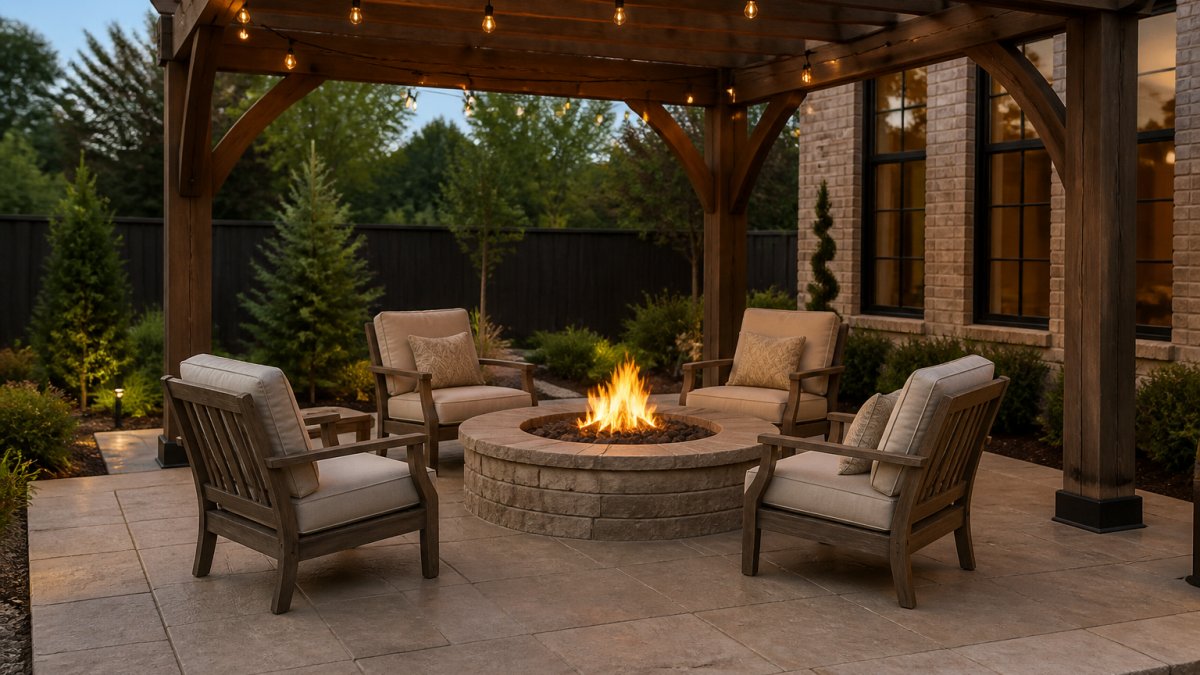
Custom outdoor fireplace design can turn a patio into a room with a wall, a hearth, and a clear center of gravity. The fireplace becomes the anchor; seating, shade, and lighting arrange themselves around it. That is different from dropping a portable fire pit on a slab. Where a fireplace gives the patio a fixed architectural center, custom steel fire pits can offer a more flexible focal point while still shaping how seating and movement gather around the flame.
What separates a good build from a great one comes down to a few structural choices:
- Chimney and draft: a properly sized flue and smoke shelf keep smoke moving up and away from seating.
- Footing and mass: masonry fireplaces are heavy, so the footing and patio base must be engineered for the load.
- Cladding and hearth: stone veneer, cast stone, or smooth stucco each change the maintenance profile and the look.
- Storage and wood: built-in log storage or a gas key valve keeps the hearth clean.
A common mistake is sizing the firebox for drama instead of for the room, since an oversized opening in a small covered patio can overheat the space.
Best for: homeowners who want a year-round gathering wall and a defined outdoor room. Skip if: your yard has no wall or structure to anchor to and you want flexibility to move the feature later.
Outdoor Fire Feature Materials: Stone, Concrete, Metal, and More
Outdoor fire feature materials decide how the feature ages, how it feels, and how much upkeep it needs.
| Material | Look | Heat Behavior | Upkeep | Best For |
|---|---|---|---|---|
| Natural stone | Rustic to refined | Holds and radiates heat well | Periodic sealing | Traditional and rustic designs |
| Cast concrete / GFRC | Modern, smooth | Stable, uniform | Occasional cleaning | Contemporary fire tables and bowls |
| Metal (steel, copper) | Sculptural | Heats fast, cools fast | Patina develops over time | Accent bowls and modern builds |
| Brick and masonry | Classic | High thermal mass | Repointing over years | Outdoor fireplaces |
Natural stone. Stone is chosen for its look and its thermal mass. Dense stone absorbs heat and releases it slowly, which is why a stone surround stays warm after the flame is out.
Cast concrete and GFRC. Glass-fiber reinforced concrete (GFRC) is molded into smooth, uniform shapes that suit modern fire tables and bowls. It holds its form and color well and is lighter than solid cast concrete, which makes it easier to site on a patio.
Metal. Steel, copper, and Corten steel are sculptural and heat quickly, which makes them good accent bowls and modern builds. Copper and Corten develop a patina over time; some homeowners want that weathered look, while others prefer a uniform finish they can seal and forget.
Brick and masonry. Brick and masonry have high thermal mass and a classic look that suits outdoor fireplaces. They handle heat well but need repointing over the years, and the mortar and unit choice affect how the structure weathers.
Watch out: pairing a high-heat metal bowl directly against certain stone or concrete surfaces without a proper barrier can cause spalling or staining over time. The surround detail matters as much as the burner.
Gas vs Wood Burning Fire Features: Which Fits Your Lifestyle?
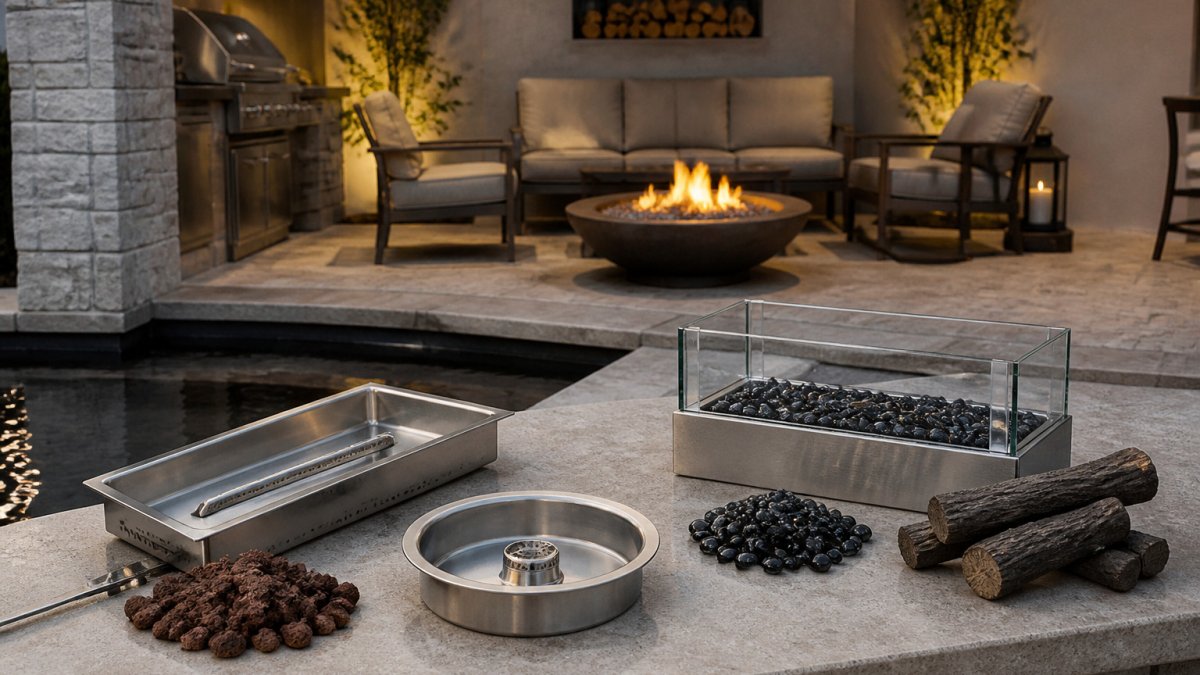
Gas fire features tend to win on convenience and control; wood-burning features tend to win on ambiance and ritual. Gas can be lit with a switch or remote, produces no sparks or ash, and requires a gas line run during construction.
The trade-offs are worth understanding:
- Natural gas: consistent flame, easy to shut off, cleaner burn, but needs a fuel line run during construction and a professional connection. The line, shutoff, and burner sizing are settled before hardscape goes down.
- Propane: a gas option where a natural gas line is not practical, with a tank to site and refill. Tank placement, screening, and refill access become part of the design.
- Wood: authentic feel and high heat, but smoke, ash disposal, and more clearance planning. Wood needs dry storage and a plan for embers and cleanup.
- Ethanol: a ventless option for some settings, with its own fuel handling considerations and a smaller flame profile than gas or wood.
Utility and venting requirements. Gas features generally need a fuel line sized for the burner and a reachable shutoff, plus ventilation so heat and exhaust move away from people and structures. Wood-burning fireplaces generally need a properly sized flue so smoke drafts up and away from seating.
Clearances and placement. Every fuel type carries clearance requirements to walls, fences, roof overhangs, and combustible materials, and those figures belong in the design conversation with your local code office. Wood generally needs more clearance planning than gas because of embers and smoke. Gas lines and propane tanks have their own placement and venting considerations.
Operating trade-offs. Gas gives you flame at the push of a button, which is why it tends to get used on ordinary weeknights. Wood asks for setup, attention, and cleanup, which suits occasions and cooler evenings when the ritual is part of the appeal.
Ask yourself one question: will you light it on a Tuesday night? If the answer is only for special occasions, wood is charming. If you want flame at the push of a button, gas usually wins.
Placement, Seating, and Hardscape Integration
Placement decides whether a fire feature becomes the heart of the yard or a decoration nobody sits near. The best spots connect to the patio, frame a view, and leave room for circulation behind the seating. Get this wrong and even a beautiful build feels awkward.
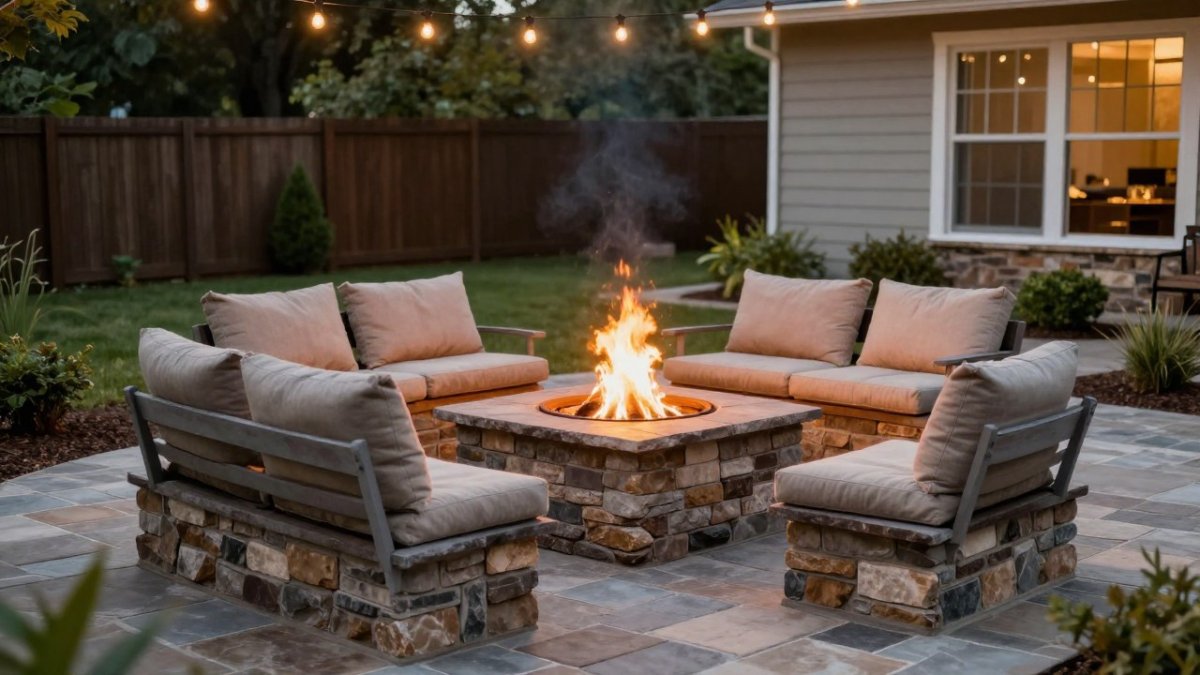
A circular layout with built-in seating creates a natural conversation circle. A symmetrical design, with the fire feature centered on a wall or pergola, reads more formal. Adirondack chairs suit a relaxed, rustic feel, while low modern lounges fit a contemporary patio.
Hardscape ties it together. If you are weighing whether the feature can sit under a covered structure, read our guide on whether you can put a fire pit under a pergola. To see how patios and stamped concrete come together around a feature, explore our concrete and hardscapes work.
Watch out: placing seating so close that guests must lean back from the flame feels exciting for five minutes and uncomfortable for the rest of the evening. Circulation and clearance are part of the design, not an afterthought.
Safety, Clearances, and Local Regulations to Plan For
Safety and local rules should shape the plan before materials are ordered, not after. Clearances to structures, overhead branches, and combustible materials, plus any permit or HOA requirements, all affect where and how a fire feature can be built. Rules vary by municipality, so the specifics belong in the design conversation.
Plan around these fundamentals:
- Clearance to structures: keep the feature a safe distance from walls, fences, and roof overhangs, and confirm the exact figure with your local code office.
- Overhead and surroundings: check for tree limbs and low coverings that could be affected by heat and flame.
- Fuel connections: gas lines and propane tanks have their own placement and venting considerations.
- Permits and HOA approval: many projects require a permit or community approval, and requirements differ by jurisdiction.
We do not promise permit approval or a fixed timeline, because those depend on your city and your specific plan. What we do is build the requirements into the design so there are fewer surprises later.
Start Your Backyard Fire Feature Design
A great fire feature starts with a clear plan: the right fuel, the right materials, and a placement that fits how you actually live outside. That is the difference between a feature you admire and one you use all season.
Villefort Luxury Outdoor Living manages the whole transformation under one vision, from the initial consultation to the final walkthrough. You get custom designs tailored to your home, transparent pricing and reliable scheduling, premium materials and skilled craftsmanship, and hands-on attention throughout. Financing options are available.
If you are ready to move forward, here is how to begin. Read our guide on how to book a custom backyard design consultation for the steps, then reach out for a free estimate. We will help you plan a fire feature that anchors your backyard for years to come.
Get started with Villefort Luxury Outdoor Living and turn your backyard into a space built for gathering, relaxing, and entertaining.
Frequently Asked Questions
What is the difference between a fire pit and a fire table for luxury backyards?
A fire pit sits lower and draws people into a circle around the flame, which suits conversation and cool evenings. A fire table brings the flame up to table height so guests can set down drinks and plates, making it better for entertaining and outdoor kitchens. Fire bowls and outdoor fireplaces are separate categories with their own placement needs. The right choice depends on whether you want a gathering circle or a functional surface.
How do I integrate a custom fire feature into my existing pool and patio design?
Start by mapping sightlines from the house and the pool deck, then choose a focal point that does not compete with the water. Poolside fire bowls on raised columns and paired fire-and-water bowls are popular for luxury pools. Keep the fire feature on the same hardscape material and level as the patio so it reads as one space. Clearances and utility routes should be confirmed before any concrete is poured.
What materials are best for high-end, durable outdoor fire features?
Natural stone, cast concrete, GFRC, corten steel, and copper are common choices for outdoor fire feature materials. Stone and concrete handle heat well and age gracefully; corten steel develops a stable rust patina; copper patinas over time. The material should match your patio, retaining walls, and home exterior. In North Texas heat and sun, lighter stone stays cooler to the touch, while metal surfaces can get hot in direct sun.
Do luxury outdoor fire features require professional installation and permits?
Gas and propane fire features involve fuel lines, shutoffs, and ventilation, so professional installation is the practical choice. Many municipalities require permits for gas lines and for built structures such as outdoor fireplaces, and rules vary by city and county. Confirm local requirements before ordering materials or scheduling work.