 listicle
Can You Put a Fire Pit Under a Pergola? What to Know
Last Updated: October 26, 2026
Quick Summary
A pergola fire pit works when the structure and flame are designed as one system, with at least 10 feet between the fire feature and combustible structures like pergola posts as design guidance. Heat and smoke need a path out, so choose open louvers, venting panels, or an open-rafter design, and confirm the burner manufacturer's clearance and ventilation limits before finalizing the roof.
- Adjustable louvers open to vent rising heat and close for weather protection.
- Aluminum pergolas are the strongest match for a gas fire pit because the frame will not burn.
- Natural gas suits frequent use because it never needs refilling; propane requires a tank with proper clearance.
- Utility planning must happen before the patio surface is poured or set.
- The most common overspend is upgrading the roof system before the fire feature and seating layout are locked.
Table of Contents
- Design Ideas for a Pergola With Fire Pit
- Pergola Over Fire Pit Safety: Clearance, Height, and Ventilation
- Choosing Materials That Handle Heat Exposure
- Custom Pergola Design and Installation: Sizing, Footings, and Layout
- Gas Fire Pit Installation: Fuel Sources and Utility Planning
- What Drives the Cost of a Pergola and Fire Feature Project
- Start Your Backyard Design With a Free Estimate
- Frequently Asked Questions
Design Ideas for a Pergola With Fire Pit
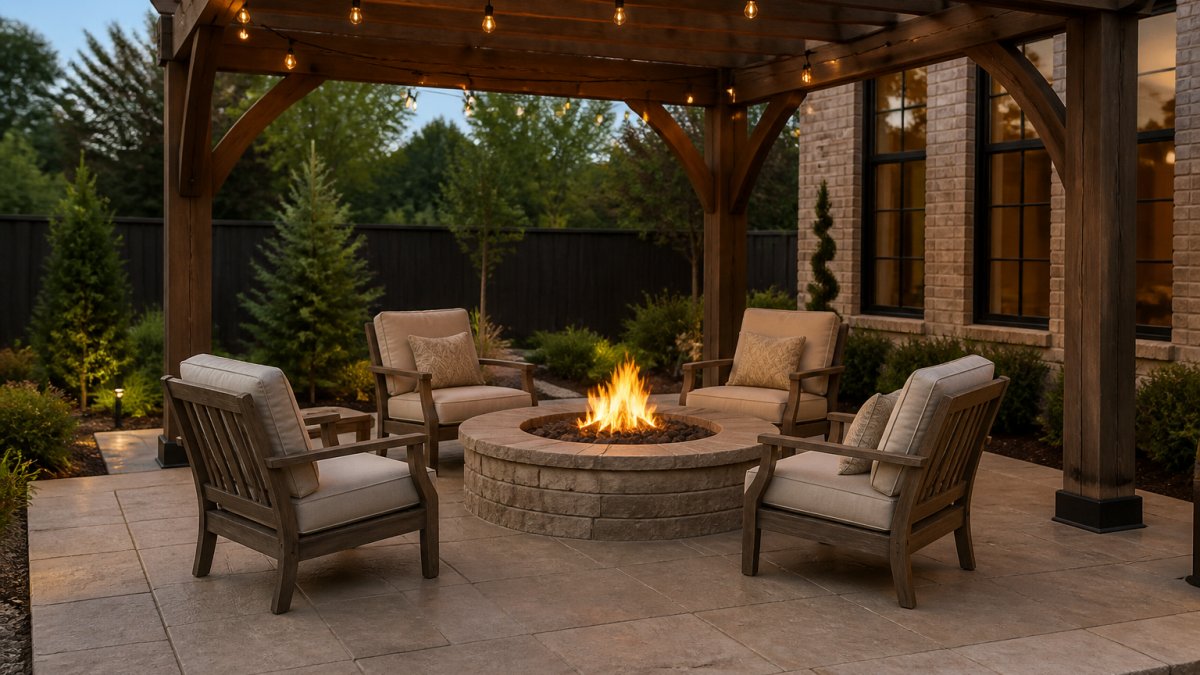
A pergola with fire pit works when the structure and the flame are designed as one system, not two purchases. The fire pit market reached $8.4 billion in 2025 and is projected to hit $8.9 billion in 2026, according to Grand View Research's fire pits market report, which tells you how many homeowners are already treating fire as a core feature rather than an afterthought.
Below, we discuss design considerations for a pergola with a fire pit.
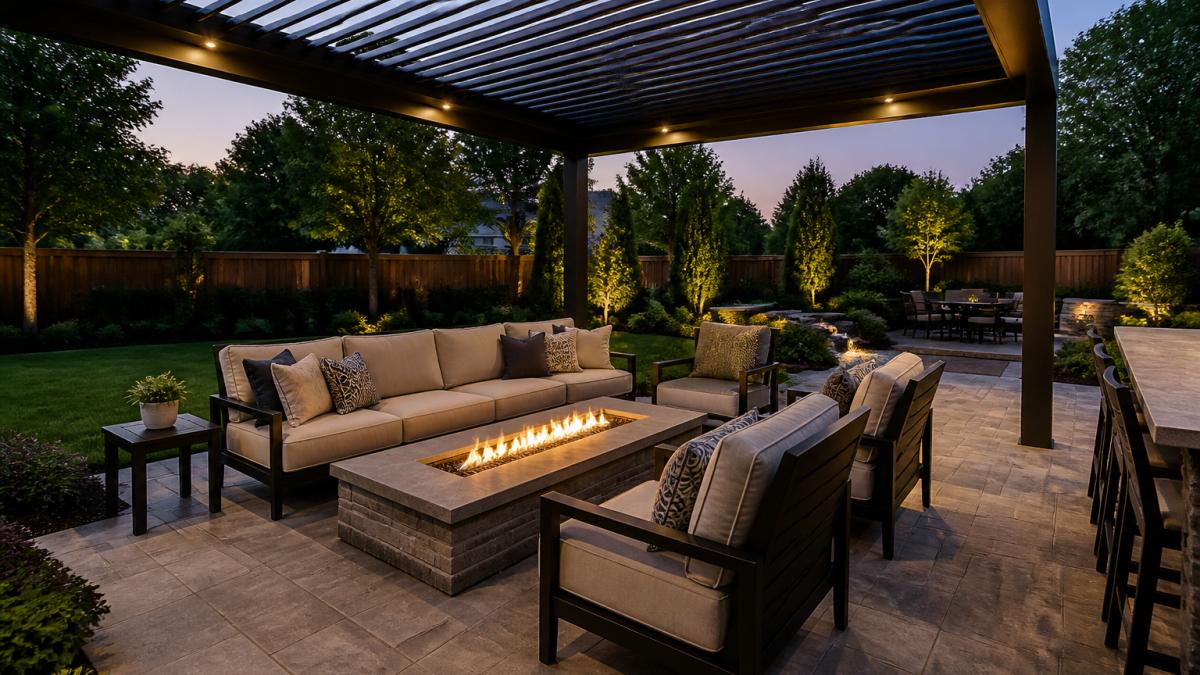
Louvered Roofs and Venting Panels
Louvered roofs solve the biggest design conflict in a pergola fire pit: you want cover overhead, but heat and smoke need somewhere to go. Adjustable louvers open to vent rising heat and close for weather protection. Most pergolas provide only 20-30% coverage on their own, per Western Timber Frame's luxury outdoor living guide, so the roof you choose does real work.
Fire Tables as a Centerpiece
A fire table is the easiest fire feature to integrate under a structure because the flame stays low and contained. To explore the company's patio covers and pergolas services and options, review the available designs. Linear gas fire tables double as a surface for drinks and anchor a seating area. Outdoor fireplaces suit larger footprints but need more vertical clearance and a flue path.
Pergola Over Fire Pit Safety: Clearance, Height, and Ventilation
Pergola over fire pit safety comes down to three numbers: clearance, ceiling height, and airflow. A 2026 design guide advises keeping at least 10 feet between a fire feature and combustible structures, including pergola posts, per Western Timber Frame. That distance is design guidance, not a universal code, so confirm local requirements before you build.
Ventilation matters just as much. Heat rises into the structure, and a closed roof traps it. Open louvers, venting panels, or an open-rafter design give heat a path out. Manufacturer instructions may set stricter limits than a general guideline, so a layout that works on an open patio may not work beneath a covered one.
Choosing Materials That Handle Heat Exposure
Material choice decides how a pergola fire pit ages. Heat exposure, ventilation, and clearance requirements should drive the selection before aesthetics enter the conversation.
Aluminum, Wood, and Vinyl Pergolas Compared
| Material | Heat Behavior | Maintenance | Best For |
|---|---|---|---|
| Aluminum | Non-combustible, handles radiant heat well | Low; powder-coat finish | Louvered roofs, gas fire features |
| Wood | Combustible; needs clearance and treatment | Refinishing every few years | Traditional, open-rafter designs |
| Vinyl | Can soften or warp near high heat | Wipe-down cleaning | Shaded seating away from flame |
Aluminum pergolas are the strongest match for a gas fire pit because the frame will not burn. Wood pergolas work when clearance and ventilation are generous. Vinyl pergolas belong where the fire feature sits well away from the frame.
Custom Pergola Design and Installation: Sizing, Footings, and Layout
Custom pergola design and installation starts with the footprint, not the catalog.
Site preparation is where good projects separate from rushed ones. Footings must reach below the frost line and sit on stable soil, and the foundation has to account for drainage. A fire feature set too close to a walkway crowds circulation; one placed off-center leaves dead space.
Gas Fire Pit Installation: Fuel Sources and Utility Planning
Gas fire pit installation begins with the fuel decision, and that decision is really a comparison across four options. Most homeowners pick a fuel before they understand what each one demands of the site, the structure, and the maintenance routine. Here is a comparison of fuel-source considerations.
Fuel-Source Comparison
| Fuel | Operating Needs | Ventilation | Maintenance | Installation Implications |
|---|---|---|---|---|
| Natural gas | Permanent line from the meter; no refilling | Still needs airflow under a roof; products of combustion rise | Low; periodic burner and media inspection | Trenching, permit, possible meter or regulator upgrade, coordination with the utility |
| Propane | Tank or cylinder; refill or delivery schedule | Same as natural gas; tank placement needs clearance | Low to moderate; tank monitoring and refills | Tank pad, clearance from structure, routing to the burner, no utility trench |
| Wood | Split wood storage and dry seasoning | Highest; smoke and embers need open air and generous clearance | High; ash removal, creosote, spark screens | Strictest clearance under any overhead structure; often incompatible with a covered roof |
| Ethanol / gel | Fuel purchased and stored; no line | Moderate; still needs airflow | Moderate; fuel handling and storage | No gas line, but output and flame size are limited; check manufacturer limits under a roof |
Natural gas suits a fire feature you use often because it never needs refilling. Propane works where no gas line exists, but the tank has to live somewhere with proper clearance and a refill schedule. Wood costs less upfront and brings smoke, ash, and the strictest clearance needs under any overhead structure. Ethanol and gel units avoid a gas line but trade away flame size and output.
Utility Requirements Before the Patio Goes Down
Utility planning is the step homeowners underestimate, and it has to happen before the patio surface is poured or set. A general sequence to consider:
- Confirm the fuel source and the burner's input rating so the line is sized correctly.
- Locate the meter or tank and measure the run to the fire feature, including any bends and the regulator location.
- Trench and route the gas line at the correct depth for the jurisdiction, with bedding and protection.
- Pull permits for the gas and any electrical work, and schedule inspections before the surface closes over the trench.
- Pressure-test and inspect the line before the burner is set and the media is installed.
- Coordinate electrical for electronic ignition, lighting, and any louvered-roof motors on the same schedule.
A natural gas line may involve trenching, permits, and utility coordination before the patio surface goes down. If the fire feature needs a new meter or a regulator upgrade, that lead time can shape the schedule.
To see what installation involves, review our fire features and pits services.
What Drives the Cost of a Pergola and Fire Feature Project
Project cost tracks scope, not a single line item, and the fastest way to understand a quote is to see it broken into the same categories every time. Whether you are comparing bids or budgeting before a consultation, ask for the estimate to separate these line items so you can see where the money actually goes.
The Line Items That Move the Number
| Cost Category | What It Covers | What Moves It Up or Down |
|---|---|---|
| Structure | Posts, beams, rafters, roof type, span, finish | Larger footprint, longer unsupported spans, louvered or solid roof systems, premium powder-coat colors |
| Fire feature | Fire pit, fire table, or outdoor fireplace; burner, media, surround | Linear vs. round, masonry vs. metal, glass media, electronic ignition |
| Site preparation | Demo, excavation, grading, base, drainage | Slope, existing concrete, poor soil, haul-off distance |
| Utilities | Gas line trenching and routing, electrical for ignition and lighting | Distance from meter, need for a new meter or regulator, low-voltage vs. line-voltage |
| Hardscape | Patio surface, footings, borders | Stamped concrete vs. pavers vs. natural stone, square footage |
| Permits and inspections | Plan review, gas and electrical permits, inspection scheduling | Jurisdiction, scope of utility work, whether the structure is attached |
| Labor and coordination | Crew time, sequencing, trade coordination | Access to the yard, weather windows, complexity of the tie-in |
Two projects with the same footprint can land far apart because of utilities and site work, not the pergola itself. A fire feature close to the gas meter with a clear trench path is a very different line item than one at the back of a lot that needs a long run, a new regulator, and a permit revision.
Where Homeowners Usually Overspend or Underspend
The most common overspend is upgrading the roof system before the fire feature and seating layout are locked. A louvered roof is a real upgrade, but if the fire feature ends up undersized for the seating area, the money went to the wrong place. The most common underspend is site preparation and drainage, which is invisible on the day of the walkthrough and expensive to fix later.
Pricing depends on project scope and site conditions; contact Villefort Luxury Outdoor Living for a quote. For a realistic sense of how long a build takes from design through final walkthrough, read our custom outdoor living space timeline expectations.
Watch out: ordering a pergola kit before the fire feature is selected often forces a redesign, because clearance and fuel routing get locked in late.
Start Your Backyard Design With a Free Estimate
A pergola fire pit is a construction project, and the contractor you choose matters as much as the design. Before you commit, learn how to vet luxury outdoor contractors so you know what questions to ask about permits, utilities, and site work. When you are ready, start your backyard design.
Frequently Asked Questions
Can I have a pergola over a fire pit?
A pergola and fire feature can be considered as part of a custom backyard design. Manufacturer instructions and local building requirements may set specific limits; consult the relevant professionals before construction.
How much clearance does a fire feature need beneath a pergola?
Clearance requirements can vary by fire feature and installation. Check the manufacturer's instructions and applicable local requirements, and confirm the layout before construction.
Which pergola materials work best near a fire feature?
Material suitability depends on the specific pergola and fire feature. Review the manufacturers' instructions and applicable local requirements when considering a design.
Should a pergola and fire feature be installed at the same time?
Whether to install a pergola and fire feature together depends on the project. Consider the site, utility needs, and applicable requirements when planning the work.
A pergola with fire pit only feels effortless when structure, fuel, and layout are planned together. Villefort Luxury Outdoor Living designs and builds cohesive backyard environments across the Dallas-Fort Worth area, with custom designs, transparent pricing, premium materials, and hands-on attention from consultation to final walkthrough. Get started with Villefort Luxury Outdoor Living and request a free estimate for your backyard transformation.