 how-to
How to Avoid Backyard Construction Delays
Last Updated: October 23, 2026
Quick Summary
To avoid backyard construction delays, lock in every design and material decision before breaking ground, submit complete permit packages early, and order long-lead items as soon as design is final. Get a detailed written schedule with permit milestones, owner decision deadlines, and a weather buffer before you sign.
- A ranked wish list and fixed scope keep schedules, permits, and material orders anchored.
- Permits run as a sequence of scheduled pauses, and a pool with spa, heater, and lighting can involve four or more inspection points.
- Order long-lead items like custom pergola components and pool equipment as soon as design is final.
- Set a weekly written progress update and a single channel for change requests at signing.
- Schedule weather-sensitive phases around wet seasons and temperature extremes, and build weather days into the schedule.
Table of Contents
- Why Backyard Construction Projects Fall Behind Schedule
- Start With a Backyard Project Planning Checklist
- Understand the Backyard Construction Permit Process
- Account for Construction Material Lead Times
- How to Communicate With a Contractor During Construction
- Evaluate the Project Schedule Before You Sign
- Plan for Weather and Site Constraints in North Texas
- Build a Delay Response Plan Before You Need One
- Frequently Asked Questions
Why Backyard Construction Projects Fall Behind Schedule
Most backyard projects don't fall behind because of bad luck. If you're still deciding how to structure your build team, this comparison of one contractor vs multiple subcontractors explains how that choice affects coordination and delays.
The good news is that delays are largely preventable. Below, we'll walk through steps to keep projects moving, from the first planning checklist to a written delay response plan.
Start With a Backyard Project Planning Checklist
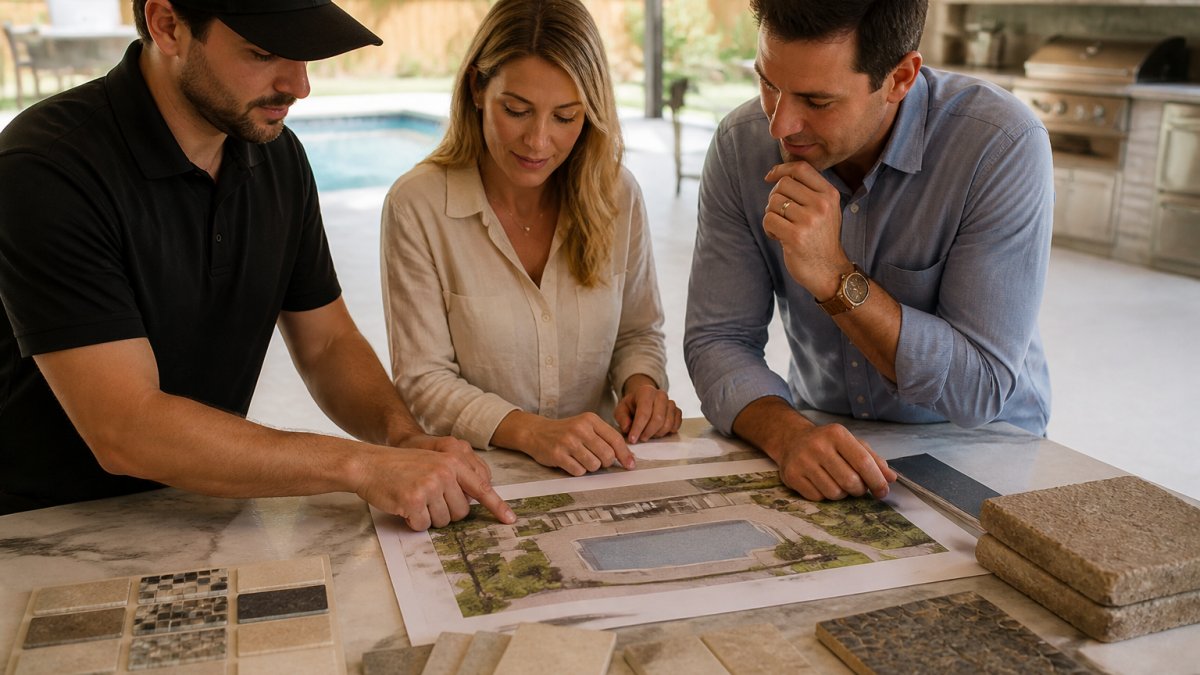
A backyard project planning checklist turns vague hopes into a fixed scope. That scope is what every schedule, permit, and material order gets built around.
Here's the checklist we walk through with homeowners before design begins:
- Final wish list, ranked by must-have vs. nice-to-have
- Realistic budget range, including a contingency reserve
- Property survey and utility locate completed
If you want to lock these decisions in with a designer, see how to book a custom backyard design consultation.
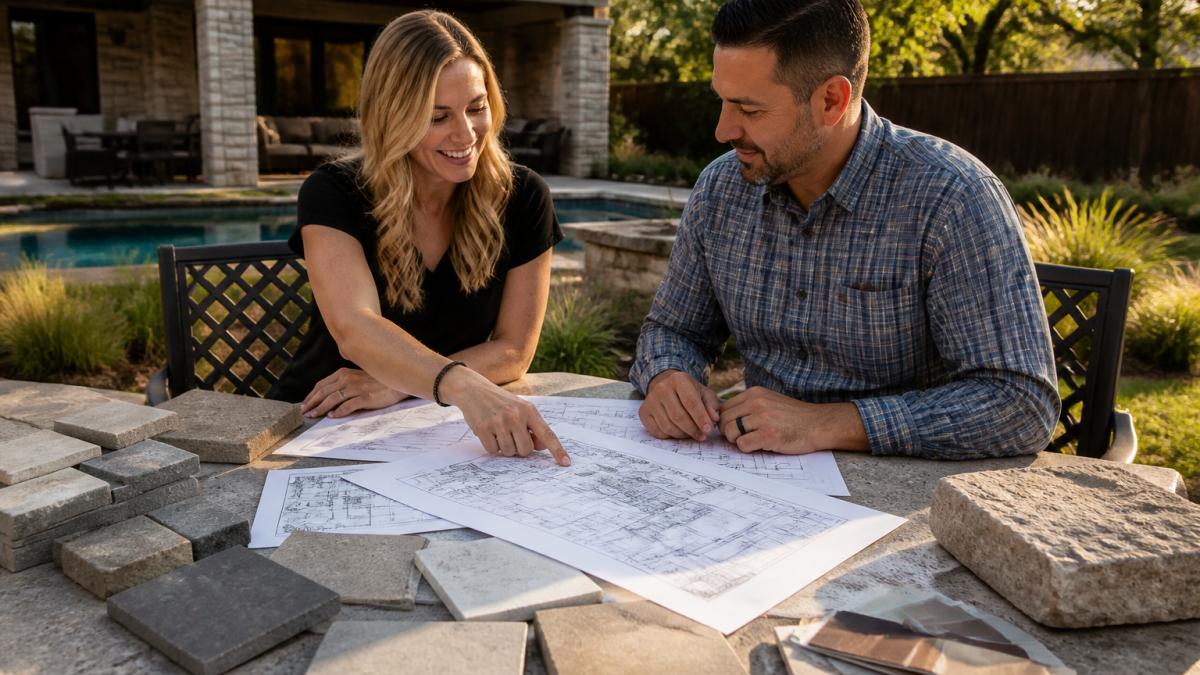
Decisions to Lock In Before Breaking Ground
Every open decision becomes a future pause. Lock these in early:
- Layout and dimensions of patios, pergolas, and pool
- Material selections for hardscape and structures
- Pool shape, depth, and features like spas or tanning ledges
Change one of these mid-build and you risk rework, new permits, and reordered materials. All three push the calendar.
Understand the Backyard Construction Permit Process
The backyard construction permit process is where many timelines quietly slip, and it slips differently depending on what you're building. A pergola, a covered patio, a pool, and an outdoor kitchen each trigger a different set of reviews, and a single project can require several permits that run on separate clocks. Treating "the permit" as one item is one of the most common scheduling mistakes we see.
Which Backyard Projects Typically Need Permits
Requirements are set by your local jurisdiction, so always confirm with your city's building department. As a general pattern across the region:
- Pools and spas, Almost always permitted, with separate electrical and gas permits for equipment, lighting, and heaters. Barrier and safety requirements often apply.
- Covered patios and roof structures, Usually permitted when attached to the house or when they carry structural loads. Engineered drawings are commonly required.
- Pergolas, Freestanding pergolas may be exempt in some jurisdictions and permitted in others, often based on size, height, and attachment.
The Permit Sequence That Actually Drives Your Schedule
Permits aren't a single gate, they're a sequence, and each step is a scheduled pause:
- Plan review, Drawings are checked against code. Incomplete submittals get kicked back and re-queued, which is why submittal quality matters more than submittal speed.
- Permit issuance, Work can't legally start before this.
- Rough-in inspections, Electrical, plumbing, and gas lines are inspected before concealment. Each inspection is a pause in the work.
- Structural inspections, Footings, framing, and tie-ins are checked at defined stages.
- Final inspection, The last gate before the project is closed out.
A pool with a spa, heater, and lighting can easily involve four or more inspection points. Each one needs to be built into the schedule, not squeezed in afterward.
What You Can Control
- Submit early and submit complete. File as soon as drawings are ready, and make sure the submittal package matches what the reviewer expects.
- Know your inspection points before work starts. Ask your builder to list them in the schedule.
- Check HOA separately. HOA architectural review is not the same as a municipal permit, and HOA approval can run on its own timeline.
We never promise a permit will be approved or a review will take a set number of days. Plans are prepared to meet local requirements before submission. For the rules that apply to your address, check your city's building department directly through the International Code Council's code adoption map.
Permits run as a sequence of scheduled pauses, and each step needs to be built into the calendar.
| Permit step | What happens | Why it matters |
|---|---|---|
| Plan review | Drawings checked against code | Incomplete submittals get kicked back and re-queued |
| Permit issuance | Legal start gate | Work can't legally start before this |
| Rough-in inspections | Electrical, plumbing, gas checked before concealment | Each inspection is a pause in the work |
| Structural inspections | Footings, framing, tie-ins checked | Checked at defined stages |
| Final inspection | Last gate before close-out | Project isn't closed out until it passes |
Account for Construction Material Lead Times
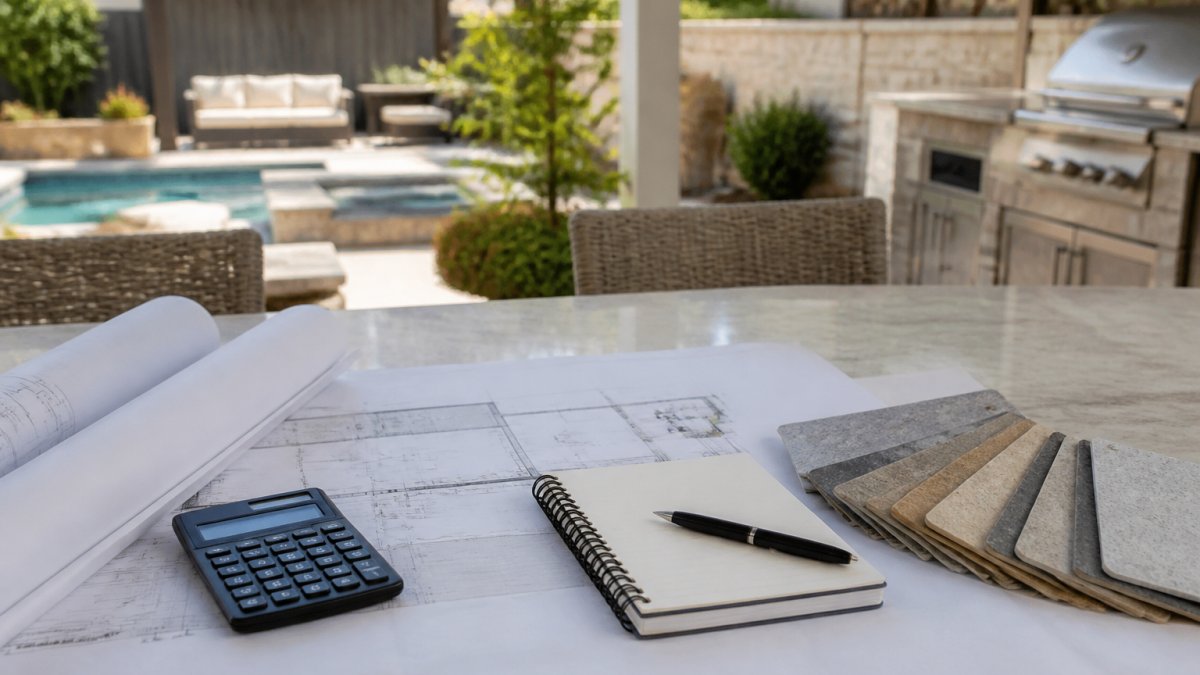
Construction material lead times are the least visible delay risk and one of the biggest. Custom items are made to order, not pulled off a shelf.
Common long-lead items in a backyard build:
- Custom pergola and patio cover components
- Specialty stone, tile, and veneer
- Pool equipment and spas
The fix is procurement planning. Order long-lead items as soon as design is final. Confirm delivery dates in writing. If you're weighing structures, you can browse patio covers and pergolas to see what your project may involve.
How to Communicate With a Contractor During Construction
Learning how to communicate with a contractor well is a homeowner skill, and it protects your timeline. Good communication is structured, not constant.
Set these expectations at signing:
- One named point of contact
- A weekly progress update, in writing
- A clear approval turnaround for owner decisions
Then hold up your end. Answer questions fast. Approve selections on time. Put every change in writing. If you're still choosing a builder, this guide on how to vet luxury outdoor contractors walks through the proven steps.
Evaluate the Project Schedule Before You Sign
Ask for the schedule before you sign, not after. A real schedule is specific, and a vague one is a warning sign.
What a credible schedule includes:
- Named phases with start and end dates
- Permit and inspection milestones
- Material order and delivery dates
Compare schedules by how detailed they are, not how short. A builder who shows you the critical path and the buffer is being honest about risk. For a realistic picture of what each phase takes, read custom outdoor living space timeline expectations.
Plan for Weather and Site Constraints in North Texas
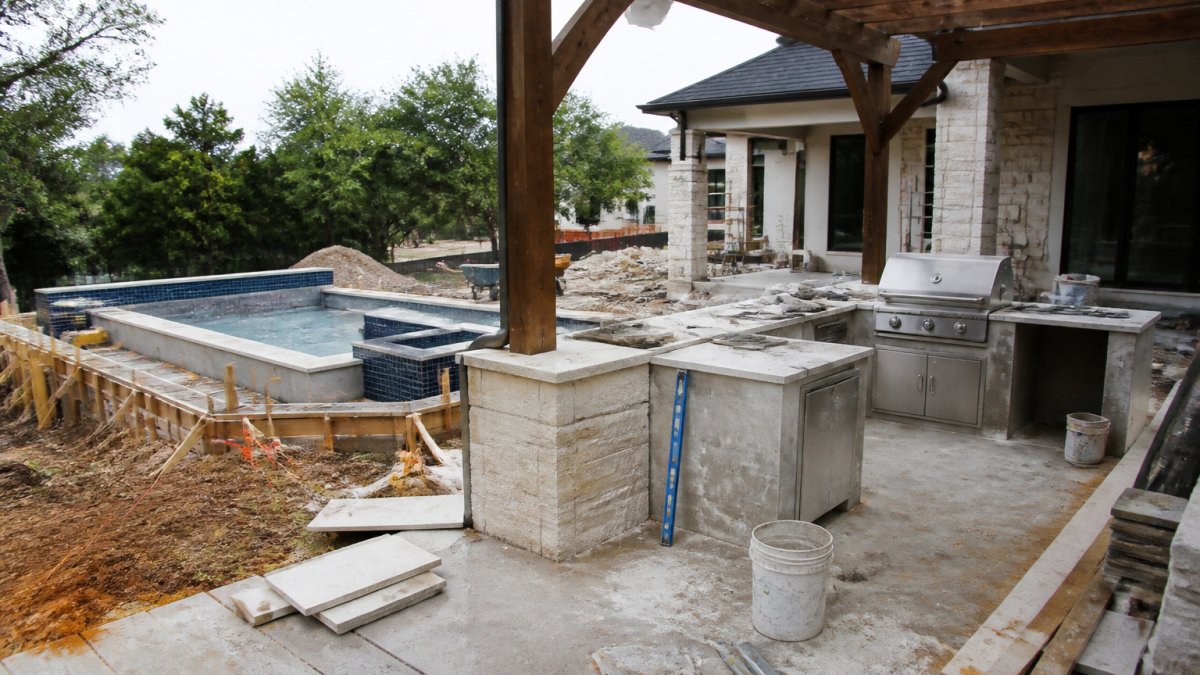
Most scheduling guides treat weather as a generic risk. In a backyard, weather and site conditions are inseparable from sequencing, the same rain that delays a pool dig also changes how a concrete pour cures, how a slope drains, and whether equipment can even reach the work area. This is the part of delay planning that general construction advice tends to skip.
Weather Windows by Work Type
North Texas swings from heavy spring rain to summer heat and occasional winter freezes, and each one pauses different work:
- Excavation and grading, Spring rain turns a dig into a mud pit. Wet soil can't be compacted, and equipment can get stuck or rut the yard.
- Concrete and stamped concrete, Heat accelerates curing and can cause cracking or finish problems; cold snaps can stop a pour entirely. Timing matters more than the forecast alone.
- Masonry and stone veneer, Freeze-thaw cycles and sustained heat both affect mortar and adhesion.
A practical approach is to schedule the most weather-sensitive phases around the wet season and the temperature extremes, and to build weather days into the schedule rather than on top of it.
Site Constraints That Stall Backyard Projects
Backyard work happens in a confined space with real physical limits. These are the constraints that catch homeowners off guard:
- Access, Can a skid steer, excavator, or concrete truck reach the work area? Narrow side yards, fences, and mature trees can force smaller equipment, hand digging, or a longer timeline.
- Staging space, Materials, spoil dirt, and equipment all need somewhere to sit. Limited staging means more trips and slower progress.
- Drainage and grading, Water has to go somewhere. If grading and drainage aren't confirmed before hardscape goes in, runoff can undermine finished work and force rework.
Sequencing Around Constraints
The fix is to plan the sequence around the site, not just the calendar:
- Confirm access routes and staging areas before mobilization.
- Complete utility locates and property survey first.
- Handle grading and drainage before hardscape and structures.
- Schedule weather-sensitive phases inside known dry and temperature windows.
- Protect finished work from runoff and heat as later phases proceed.
Build a Delay Response Plan Before You Need One
A delay response plan is a written agreement on what happens when something slips. It's the difference between a hiccup and a crisis.
Include these in your contract:
- A defined notice period when a delay occurs
- A named contact and update cadence during the delay
- A revised schedule issued in writing
- A clear process for change orders and cost impact
- A documented path for weather and permit delays
At Villefort Luxury Outdoor Living, we manage the full transformation under one vision, from consultation to final walkthrough, with transparent scheduling and clear communication at every phase.
Frequently Asked Questions
What are the most common causes of backyard construction delays?
The most frequent causes are late owner decisions, incomplete permit approvals, backordered materials, and poor subcontractor coordination. Design changes made after work starts also push schedules back because trades have to redo finished work. Weather plays a role, but in most backyard construction projects it is a smaller factor than planning gaps. Locking in selections early, submitting permits with complete drawings, and confirming material availability before demolition begins prevents most of these problems.
How can I prevent permit delays for a backyard project?
Submit a complete application the first time. That means accurate site plans, structural drawings for covered patios or pergolas, and clear scope descriptions for pools and outdoor kitchens. Ask your contractor who is responsible for the submittal and who responds to plan review comments. Build review and inspection time into the schedule rather than treating it as a formality. Projects that skip this step often sit idle for weeks waiting on corrections.
How far in advance should I order materials for an outdoor kitchen or patio?
Order long-lead items as soon as the design is finalized and the permit is submitted, not after approval. Outdoor kitchen appliances, custom cabinetry, specialty tile, and pool equipment are the items most likely to hold up a schedule. Ask your contractor for a written procurement list with order dates tied to the construction timeline. Confirming construction material lead times before signing a contract gives you a realistic start date instead of an optimistic one.
What should I do if my backyard project is falling behind schedule?
Ask for an updated schedule in writing that shows what slipped and why. Find out which remaining tasks are on the critical path, meaning the work that blocks everything after it. Then agree on a recovery plan: added crews, resequenced work, or adjusted delivery dates. Keep decisions moving on your end, since owner approvals are a common bottleneck. A contractor who communicates delays early and puts a recovery plan in writing is handling the problem correctly.
A backyard build can still hit a snag, but a clear scope, early permits, smart material ordering, and a written delay plan keep small problems from becoming lost months. Villefort Luxury Outdoor Living brings complete outdoor living solutions under one vision, custom designs tailored to your home, and hands-on attention from consultation to final walkthrough. Start your backyard design and request a free estimate to build a schedule you can actually count on.